Order: Lamniformes  ·  Family: Lamnidae

GREAT
WHITE
SHARK

Carcharodon carcharias

400 million years of evolution. The ocean's most studied, most filmed, and most misunderstood apex predator. Here are the facts.

6.1m Maximum recorded length
2,268 Max weight (kg / ~5,000 lbs)
70+ km/h top burst speed

↓ scroll

Fast Facts

300+ Teeth (in multiple rows)
25+ Year lifespan
15 Years to sexual maturity
2–14 Pups per litter
~3,500 Estimated global population
12–18 Month gestation period
11°C Min. water temp preferred
1/million Concentration of blood detectable

Biology & Physiology

Great whites are partially endothermic — one of only a handful of fish species that can maintain body temperature above ambient water. This is not a minor adaptation. It changes everything about what they can do.

Endothermy — Warm Blood in Cold Water

A specialized circulatory system called the rete mirabile ("wonderful net") acts as a countercurrent heat exchanger. Warm venous blood from the muscles runs alongside cold arterial blood from the gills, transferring heat before the cold blood enters the core. The result: muscles, eyes, and brain operate at temperatures 4–14°C above the surrounding water.

This thermal advantage means faster muscle contraction, sharper vision, and quicker cognitive processing compared to ectothermic sharks — allowing great whites to hunt efficiently in cold, prey-rich upwelling zones where competitors cannot operate.

Teeth — A Conveyor Belt of Blades

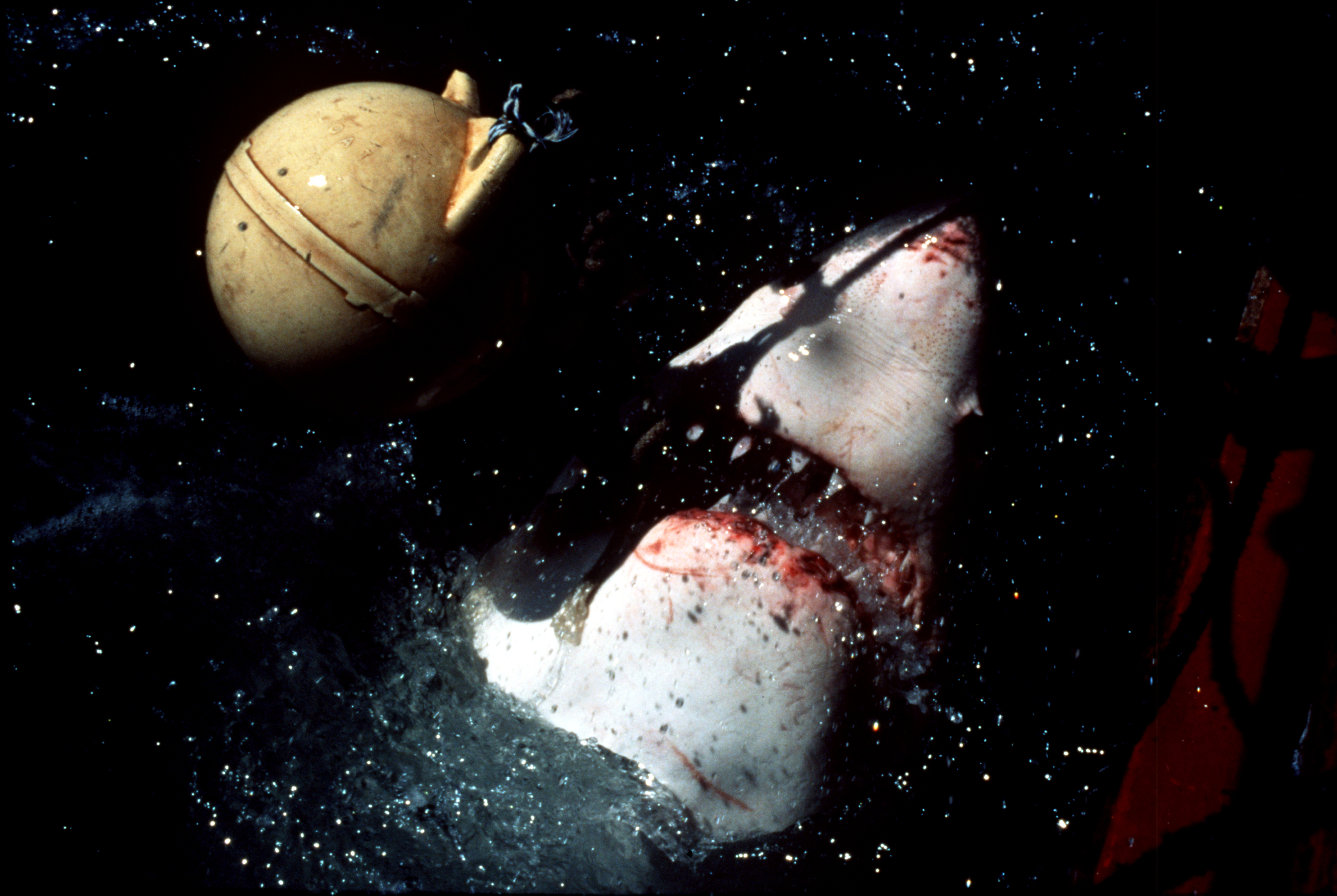
A great white carries up to 300 teeth arranged in 5–7 rows. The front rows are the working teeth — serrated, triangular, up to 6.7 cm tall. Behind them, rows of replacement teeth wait in a conveyor-belt arrangement. Each tooth lasts roughly 1–2 weeks before being shed; a shark produces tens of thousands of teeth in a lifetime. Jaw pressure has been estimated at 18,000 newtons.
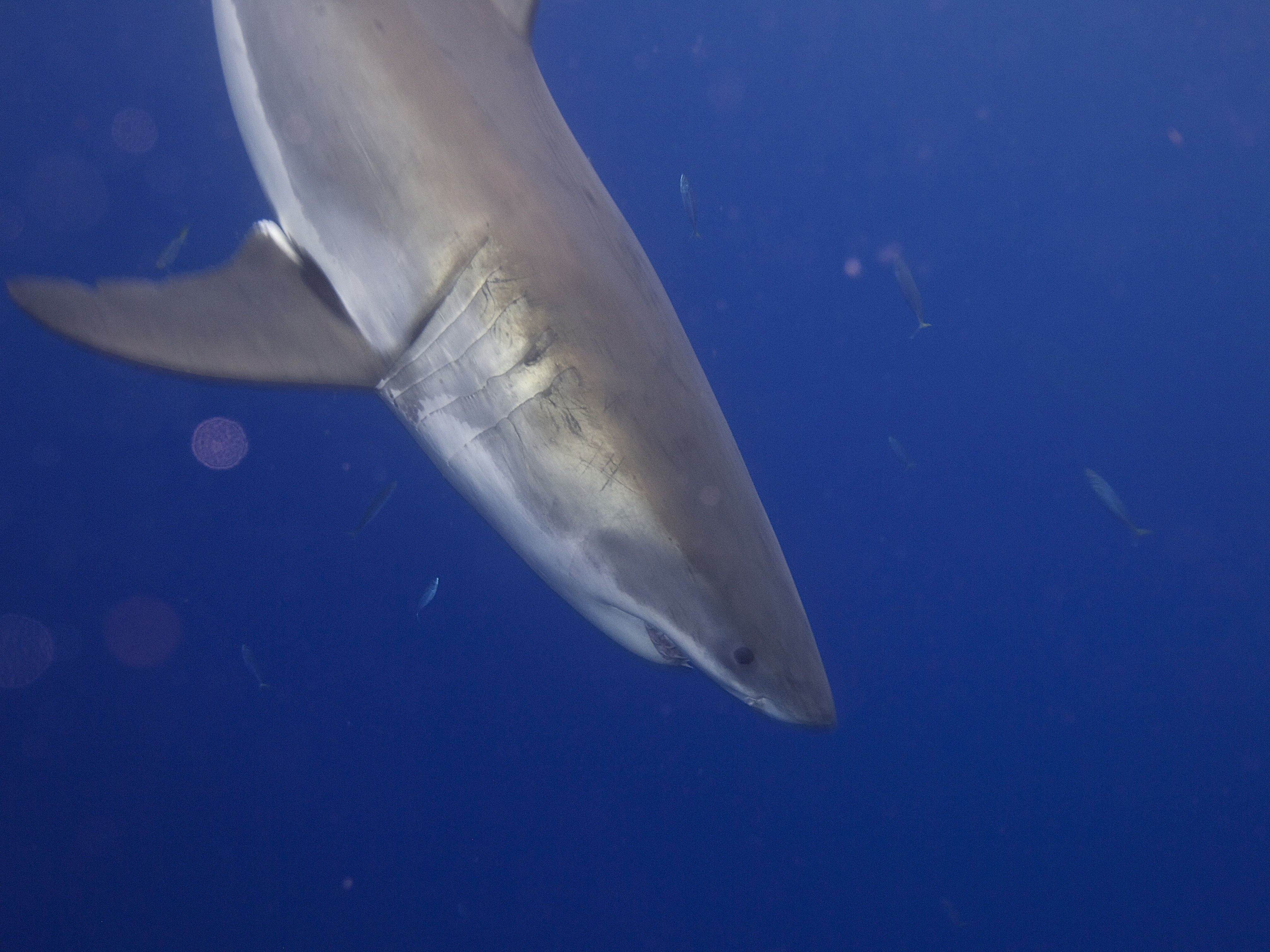
Great white shark

Skin — Dermal Denticles

Great white skin is covered in placoid scales called dermal denticles — tiny, tooth-like structures aligned to reduce drag. Water flows over them in laminar sheets, cutting turbulence. Engineers have studied the geometry for aerospace and marine applications. Running a hand from tail to head feels like sandpaper; head to tail is smooth.

Size Dimorphism

Female great whites are significantly larger than males — sometimes by a meter or more. The largest reliably measured specimens are all female. The famous "Deep Blue," estimated at 6.1 m and over 2,000 kg, is a female. The evolutionary reason for this is likely tied to the energetic demands of carrying and gestating 2–14 large pups for 12–18 months — larger females can sustain more offspring.
Shark underwater

Hunting Behavior

Great whites are not opportunistic ambush predators by default — they are calculated, patient, and adaptable hunters that adjust strategy based on prey type, water conditions, and learned experience.

The Breach Attack

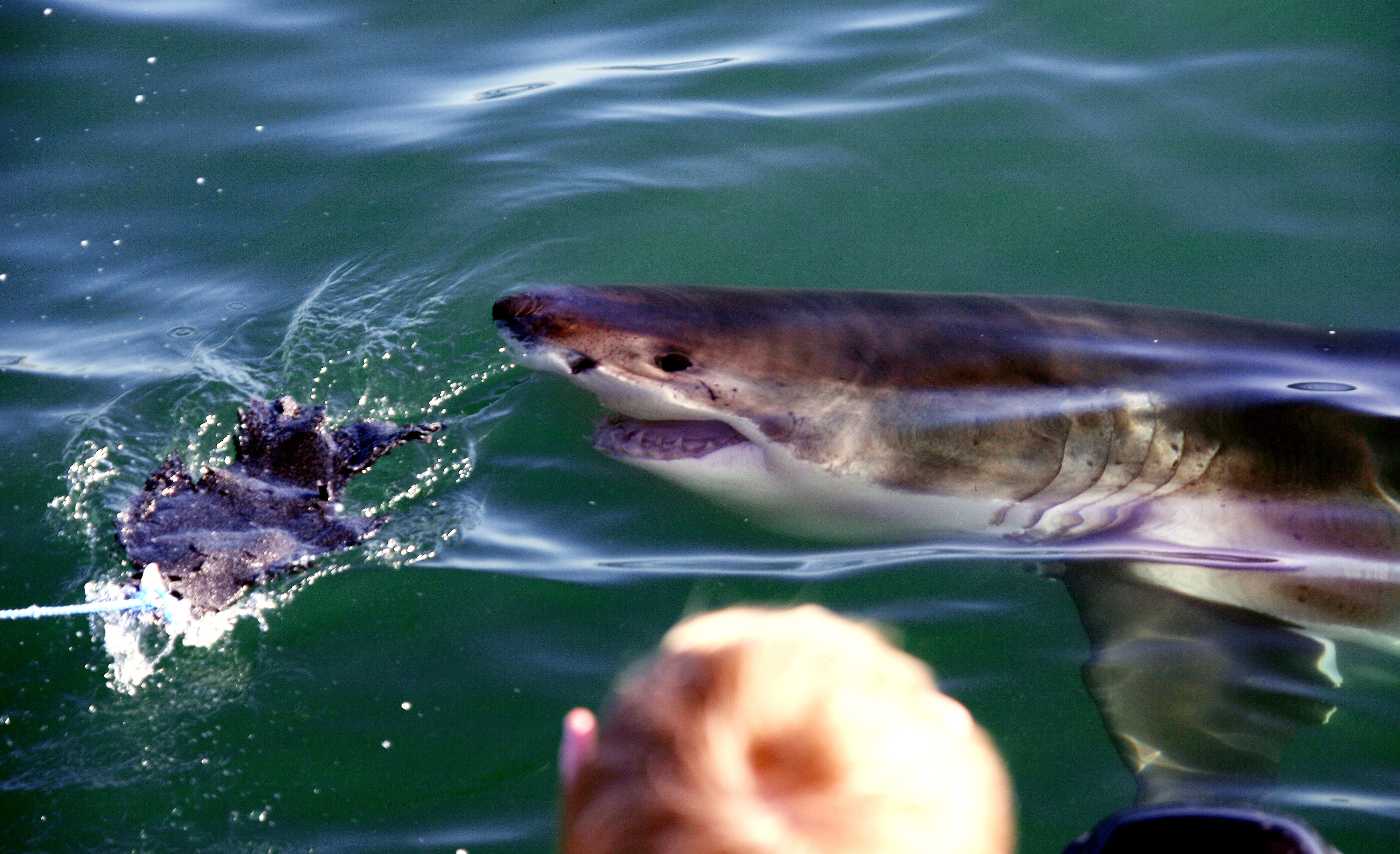
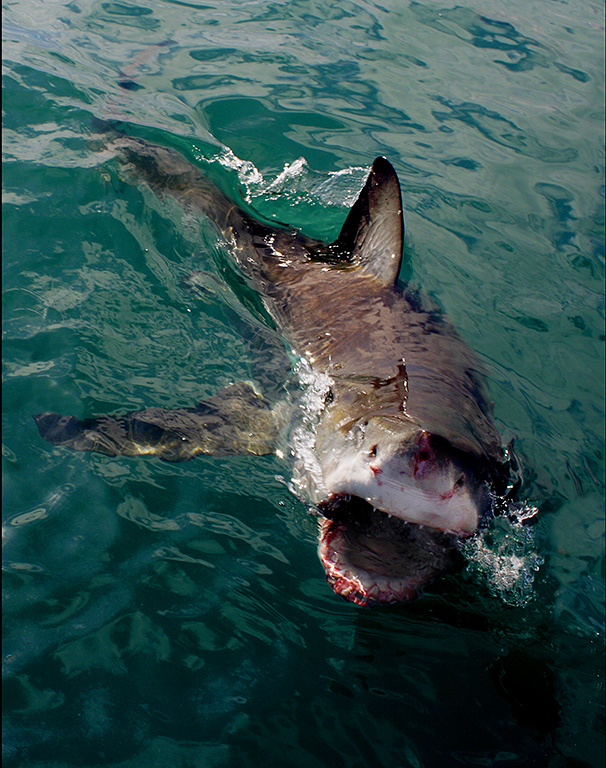
The most dramatic great white hunting technique — made famous off South Africa's Seal Island — involves approaching from directly below at high speed, striking the prey with explosive force, and breaching the surface. Strike speeds up to 25 mph have been recorded. The shark often releases the prey after the initial strike and circles to wait for it to weaken from blood loss before returning — minimizing injury risk from thrashing prey.

This breach behavior is most strongly associated with Cape fur seal hunting at Gansbaai and Seal Island, South Africa. In California and other regions, different prey and topography lead to different approach strategies.

Diet by Life Stage

Juvenile great whites (under ~3 m) primarily eat fish, smaller sharks, and rays — prey they can subdue without significant risk. As they grow, their jaws develop the torque to penetrate marine mammal blubber, and their diet shifts decisively toward pinnipeds (seals, sea lions), small cetaceans (dolphins, porpoises), and whale carcasses.

Prey Preference Table

Prey Type Primary Age Group Region
Bony fish (tuna, grouper)Juvenile / sub-adultGlobal
Elasmobranchs (rays, sharks)Juvenile / sub-adultGlobal
Cape fur sealsAdultSouth Africa
California sea lionsAdultPacific USA
Guadalupe fur sealsAdultMexico
Elephant sealsLarge adultPacific USA
Dolphins / porpoisesAdultGlobal
Whale carcassesAdultGlobal
Sea turtlesAdultTropical ranges

Caloric Strategy

A single large elephant seal provides enough calories to sustain a great white for approximately 1.5 months. This is why adult great whites don't need to feed constantly — unlike the feeding machines of fiction. Between large kills, they can go weeks without eating, making their caloric efficiency exceptional among large predators.

Six Senses

Great whites possess six distinct sensory systems, several of which operate at ranges and sensitivities with no human equivalent. They don't hunt by sight alone — they are multi-sensor predators.

Electroreception

Ampullae of Lorenzini — gel-filled pores concentrated around the snout — detect the bioelectric fields generated by living tissue. A beating heart, a contracting muscle, even nerve impulses produce detectable signals. Range: sub-meter detection of resting prey buried under sand. At close range, this system guides the final strike — the shark may close its eyes during impact and still land precisely.

🌊

Lateral Line

A mechanoreceptor system running the length of the body detects pressure waves and water displacement. An injured, struggling fish creates a specific vibration pattern in the water column. Great whites can detect this from hundreds of meters. The lateral line is why "swimming like prey" — erratic, splashing surface movement — is more likely to attract attention than steady swimming.

👃

Olfaction (Smell)

Roughly 2/3 of a great white's brain is devoted to olfactory processing. Blood in seawater can be detected at concentrations of 1 part per million across hundreds of meters downwind. They follow olfactory plumes upcurrent — the "smelling in stereo" capability (nostrils separated by distance) helps triangulate direction. Contrary to myth, one drop of blood in the ocean is not detectable from miles away — but a sustained wound in a current can create a plume many meters long.

👁️

Vision

Great whites have large eyes with a high concentration of rod cells for low-light environments and excellent motion detection. During a strike, the nictitating membrane — a protective third eyelid — rolls forward to shield the eye. This is why great whites sometimes appear to "roll back" their eyes at the moment of impact. They are likely capable of seeing color to some degree, though primarily optimized for contrast and movement.

🔊

Hearing

Internal ears (no external ear structure visible) detect low-frequency sounds in the 25–50 Hz range — the frequency band produced by struggling or injured fish. Sound travels ~4x faster through water than air. Great whites can detect these frequencies from kilometers away. They navigate toward low-frequency "distress signals" long before other senses engage.

🤚

Touch / Taste

Sensory cells in the skin detect touch and pressure. The mouth contains taste buds and sensory cells that evaluate prey in the first bite — this is why most shark bites on humans involve a single investigatory bite followed by release. Humans are low-fat, bony, and unrecognizable as prey. The shark's sensory sample says "not seal" and it moves on. This is not mercy — it is information processing.

Range & Migration

Great whites are highly migratory. Individuals tagged off California have been tracked to Hawaii; South African sharks cross to Australia and back. They are true ocean wanderers — not confined to a single coastal range.

Aggregation Sites

While individuals range widely, great whites return seasonally to specific aggregation sites where prey is concentrated. These sites are among the most well-studied locations for great white behavior.

Farallon Islands, California Guadalupe Island, Mexico Neptune Islands, South Australia Gansbaai / Seal Island, South Africa Chatham Islands, New Zealand Mediterranean Sea (rare) Azores, Portugal Choshi, Japan

Migration Distances

GPS and acoustic tagging has revealed extraordinary migrations. A female tagged off South Africa in 2003 was detected near Exmouth, Australia — 11,000 km away — within 99 days, averaging 90+ km per day. She returned to South Africa the following year.

In the Pacific, sharks tagged at the Farallon Islands regularly transit to a mid-ocean region researchers nicknamed the "White Shark Café" — a deep-water zone between California and Hawaii where they spend months in winter. The purpose of this migration is still being studied; mating is the leading hypothesis.

  • Longest tracked migration~20,000 km round-trip
  • Average daily travel50–120 km
  • Deepest recorded dive>1,200 m
  • Water temp preference12–24°C

What the Science Says

No marine animal has a larger gap between cultural mythology and scientific reality. These are the data-backed corrections to the most persistent misconceptions.

Myth

"Great whites hunt humans as prey."

Fact

Humans don't appear in great white diets. The vast majority of bites (>90%) are single investigatory contacts with no follow-up — the shark bites, releases, and swims away. Humans are too lean, too bony, and too unrecognizable as prey. Globally, fewer than 5 people per year die from unprovoked great white bites.

Myth

"Great whites are always hungry, constantly feeding."

Fact

A large adult can survive 1.5 months on a single elephant seal. Great whites are energy-efficient — not voracious. Between major kills, they cruise slowly, conserving energy. Some individuals have been tracked going weeks at a time with no observed feeding events.

Myth

"Great whites are simple, instinct-driven animals."

Fact

Research documents individual personalities, social hierarchies at feeding sites, play behavior with floating objects, and multi-step strategic hunting. Individuals at Seal Island, South Africa have been observed learning specific approach vectors from each other — cultural transmission of hunting knowledge between sharks.

Myth

"Great white populations are stable or recovering."

Fact

The IUCN lists the species as Vulnerable with a declining population trend. Estimated global count: ~3,500 individuals. Their slow reproductive rate (first offspring at 15+ years, 2-year breeding cycle) means any sustained mortality from human activity cannot be offset by natural reproduction at current rates.

Great white shark Underwater shark Shark breaching
Learn about shark conservation →